

본 프로젝트는 삼성탈레스가 수행한 B2CS(Battalion Battle Command System, 대대급 이하 전투지휘체계) 개발 과정에서 제안된 지휘관용 휴대형 전술 단말기 컨셉 디자인으로, 지상군 전투력 향상을 위한 차세대 자동화 지휘통제 환경을 시각적으로 구현하기 위해 기획되었다. 2010년 당시 군 전장 환경은 아날로그 기반 장비 중심 운용에서 디지털 네트워크 기반의 정보 중심 작전 개념으로 빠르게 전환되고 있었으며, 본 디자인은 이러한 변화 속에서 지휘관이 현장에서 직접 운용하는 정보 단말기의 새로운 형태를 제시하고자 한 시도였다. 기존 군용 컴퓨팅 장비가 통신 장비 또는 산업용 컴퓨터의 연장선에 머물러 있었다면, 본 프로젝트는 전술 상황 인지와 지휘 의사결정 과정 자체를 지원하는 ‘전투 지휘 인터페이스’라는 개념을 디자인적으로 정의하는 데 초점을 두었다.
이 단말기는 지휘소 내부, 기동 중 차량, 야전 작전 현장 등 고정되지 않은 다양한 운용 환경을 전제로 설계되었다. 따라서 제품 디자인은 특정 공간에 종속되는 장비가 아니라, 언제 어디서든 동일한 작전 경험을 제공하는 이동형 지휘 플랫폼이라는 개념에서 출발한다. 형태적으로는 태블릿, 노트북, 군용 장비의 특성이 융합된 하이브리드 구조를 채택했으며, 이는 단순한 형태적 결합이 아니라 작전 상황에 따라 변화하는 지휘관의 행동 패턴을 반영한 결과였다. 정보 확인 중심의 상황에서는 디스플레이 중심 장치로 인식되며, 명령 입력과 계획 수립 단계에서는 키보드와 결합된 전술 작업 장비로 전환되는 구조는 장비의 물리적 상태 자체가 작전 모드를 상징하도록 의도되었다.
디자인 전반에는 군 장비 특유의 과도한 기계적 거칠음을 배제하고, 통제된 강인함을 표현하는 조형 언어가 적용되었다. 외형 프레임은 단순한 보호 케이스가 아니라 구조 자체가 장비를 보호하는 일체형 구조로 구성되었으며, 두꺼운 외곽 라인은 충격 보호라는 기능적 목적과 함께 시각적으로 안정된 장비 이미지를 형성한다. 모서리와 가장자리의 볼륨 처리는 낙하 및 충격 상황을 고려한 동시에 장비가 전술 환경 속에서 하나의 완결된 도구로 인식되도록 만드는 디자인 요소로 작용한다. 이러한 접근은 군 장비가 흔히 보여주는 ‘견고함의 과시’가 아니라, 사용자가 장비를 완전히 통제하고 있다는 심리적 신뢰감을 전달하는 방향으로 전개되었다.
제품의 비례와 무게 중심 또한 중요한 디자인 요소로 고려되었다. 상부 디스플레이는 보호 구조와 일체화되어 시각적으로 안정된 프레임을 형성하고, 하부 입력 장치는 낮은 중심을 만들어 실제 사용 환경에서의 안정성을 암시한다. 이는 이동 차량이나 임시 테이블, 야전 환경과 같이 흔들림과 제약이 존재하는 공간에서도 장비가 흔들리지 않고 작전 수행의 중심 역할을 한다는 이미지를 강화한다. 좌우 대칭을 기반으로 한 조형은 군 장비 특유의 신뢰성과 질서를 시각적으로 표현하며, 복잡한 기술 장비임에도 불구하고 직관적인 인상을 유지하도록 설계되었다.

인터페이스 디자인은 당시 빠르게 확산되던 터치 기반 디지털 경험과 군 환경에서 여전히 필수적인 물리 조작 체계 사이의 균형을 모색한 결과물이다. 전투 상황에서는 장갑 착용, 진동, 저조도 환경 등으로 인해 시각 의존도가 제한되기 때문에, 본 단말기의 조작 요소는 촉각 인지 중심으로 디자인되었다. 버튼과 컨트롤 영역은 단순한 입력 장치가 아니라 손의 위치만으로 조작 가능하도록 설계된 촉각적 기준점으로 기능하며, 사용자가 화면을 응시하지 않아도 장비를 운용할 수 있도록 배치되었다. 이는 정보 접근 속도와 지휘 반응성을 향상시키는 동시에, 디자인이 사용 경험의 일부로 작동하도록 만든 핵심 요소였다.
표면 마감과 컬러 전략 역시 전술 환경을 고려한 디자인 판단의 결과이다. 저반사 무광 표면은 시각적 위장성과 실사용 환경 적응성을 동시에 충족시키며, 불필요한 광택이나 장식 요소를 제거함으로써 장비의 존재감을 절제된 방식으로 표현한다. 컬러는 특정 병과나 환경에 종속되지 않는 중립적인 군용 톤을 기반으로 하여 다양한 작전 환경에서 자연스럽게 통합될 수 있도록 설정되었다. 그래픽 요소와 브랜드 표기는 최소한으로 제한되어 있으며, 이는 장비가 브랜드 오브젝트가 아니라 작전 도구라는 인식을 강화하기 위한 선택이었다.
본 디자인에서 중요한 점은 기능을 강조하기보다, 미래 군 정보환경에서 지휘관이 경험하게 될 ‘정보 중심 전장’을 시각적으로 구체화했다는 데 있다. B2CS가 지향했던 자동화 지휘통제 개념은 단순한 데이터 표시가 아니라 전투 상황을 실시간으로 공유하고 판단을 지원하는 통합 정보 체계였으며, 본 단말기는 그러한 체계가 개인 지휘관 수준까지 확장되었을 때 어떤 형태로 존재해야 하는지를 디자인적으로 제안한 결과물이라 할 수 있다. 장비는 더 이상 무전기나 컴퓨터처럼 개별 기능을 수행하는 도구가 아니라, 전장 정보를 통합하고 인간의 판단 능력을 확장하는 인터페이스로 정의되었다.
2010년 시점에서 본 프로젝트는 실제 기술 구현 가능성보다 한 단계 앞선 미래 전투체계를 가정한 컨셉 디자인이었지만, 이후 군 정보화 장비들이 태블릿 기반 전술 단말기와 네트워크 중심 지휘 시스템으로 발전해온 흐름을 고려하면, 당시 제안된 디자인 방향성은 상당히 선행적인 접근이었다고 평가할 수 있다. 특히 군용 장비 디자인을 단순한 하드웨어 외형 개발이 아니라, 전투 환경 속 인간·정보·장비의 관계를 재구성하는 전략적 디자인 영역으로 확장했다는 점에서 의미를 가진다.
결과적으로 본 지휘관용 휴대 단말기 컨셉은 미래 지상군 전투력 향상을 위한 자동화 지휘통제 시스템의 물리적 상징이자, 스마트 전장 환경 속에서 지휘관의 인지 능력을 확장하는 새로운 군용 인터페이스의 가능성을 제시한 디자인 프로젝트였다. 이는 장비의 강인함을 표현하는 데 머무르지 않고, 정보 우위 기반 전투 개념을 디자인 언어로 구현하려는 시도였으며, 군 산업디자인이 기술과 전략 사이에서 수행할 수 있는 역할을 보여주는 사례로서 의의를 가진다.
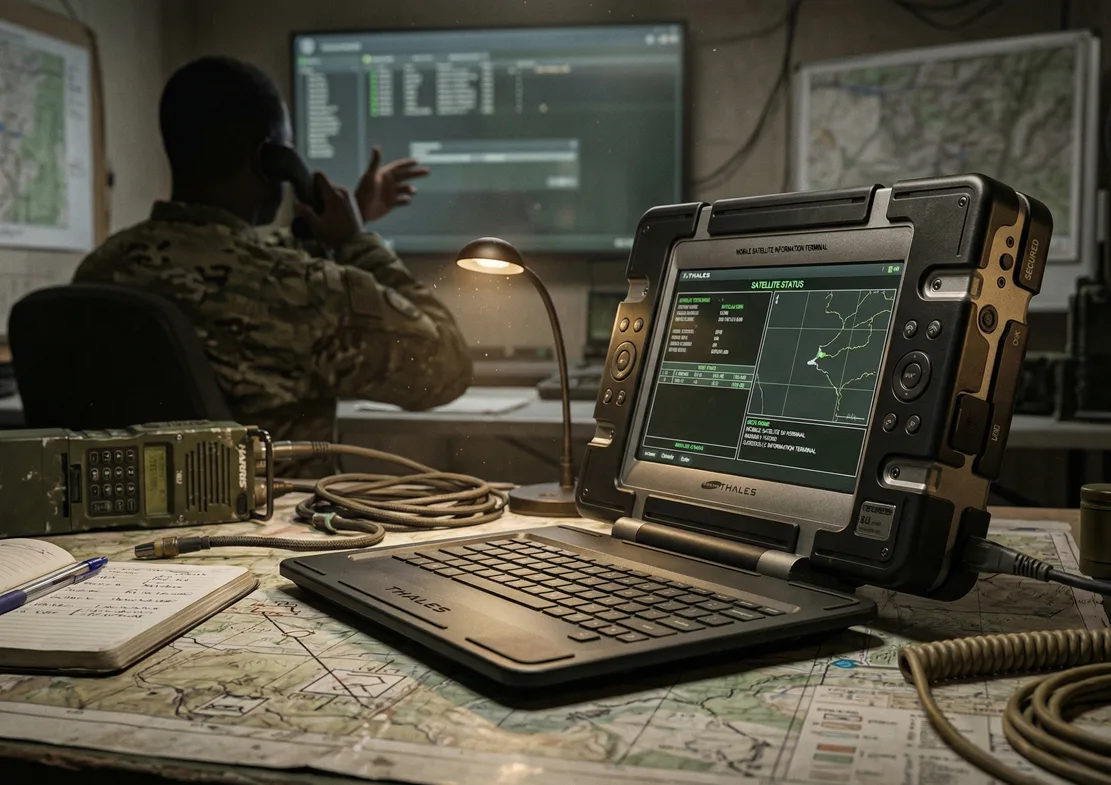
This project was a conceptual design proposal developed in 2010 as part of the B2CS (Battalion Battle Command System) program conducted by Samsung Thales, a core initiative aimed at enhancing ground force combat effectiveness through an advanced automated command and control system. The design focused on envisioning a next-generation portable tactical terminal for field commanders, reflecting the transition of modern warfare from equipment-centered operations to information-centered battlefield environments.
At the time, military operational systems were rapidly evolving toward network-centric warfare, where real-time information sharing and situational awareness became decisive factors in command effectiveness. Rather than designing a conventional rugged computer or communication device, this project approached the terminal as a tactical interface that extends the commander’s cognitive capability in the field. The goal was to create a physical embodiment of a smart military information environment, allowing commanders to access and interpret operational data seamlessly across command posts, mobile vehicles, and active operational zones.
The design adopts a hybrid form language positioned between a tablet, laptop, and military equipment platform. This configuration reflects varying operational contexts: observation, planning, and command execution. The detachable keyboard structure visually and functionally represents shifts in operational mode, enabling the device to transition from a situational awareness tool into an active command workstation. Rather than emphasizing technological complexity, the design communicates clarity, stability, and control—qualities essential for decision-making under combat conditions.
A key aspect of the design is its controlled ruggedness. Traditional military devices often rely on excessive visual heaviness to communicate durability, whereas this terminal integrates protection directly into its structural form. The monocoque-inspired outer frame acts simultaneously as housing and protective architecture, reducing unnecessary visual noise while maintaining a strong operational presence. Rounded edges and reinforced corner volumes were carefully designed to distribute impact forces while presenting a balanced and stable silhouette suited to dynamic field environments.
Visual balance and perceived weight distribution play a crucial role in reinforcing user confidence. The lower docking keyboard establishes a grounded center of gravity, while the protected display frame conveys reliability and structural integrity. Symmetrical control placement further enhances intuitive usability and reflects the disciplined visual language commonly associated with military systems. The device is intentionally designed to appear dependable rather than aggressive, emphasizing operational trust over mechanical intimidation.
Interface design follows a hybrid interaction philosophy combining digital display interaction with tactile physical controls. Military environments often restrict reliance on visual interaction due to gloves, vibration, or low-visibility conditions. Therefore, physical buttons were designed as tactile landmarks, allowing users to operate essential controls through touch alone. This approach transforms hardware interaction into a sensory navigation system, enabling faster response and reduced cognitive load during high-pressure operations.
Material and color strategy were also critical components of the design. Low-reflective matte finishes minimize visual exposure while reinforcing a professional military identity. Neutral tactical tones allow the device to integrate naturally into various operational settings without drawing unnecessary attention. Branding and graphic elements were intentionally minimized to prioritize functional readability and operational clarity over commercial expression, reinforcing the idea of the device as a mission tool rather than a consumer product.
From a broader perspective, the project represents an early visualization of how automated command and control systems could evolve at the battalion level and below. The B2CS initiative sought to connect dispersed units through integrated battlefield information, and this portable terminal translates that strategic objective into a human-centered design solution. The device is not merely hardware but a conceptual platform illustrating how information, mobility, and command authority converge in future ground combat operations.
Although conceived as a forward-looking concept in 2010, the design anticipated many characteristics seen in later military digitalization trends, including mobile tactical computing and distributed command interfaces. Its significance lies in redefining military equipment design beyond physical durability, proposing instead an intelligent tactical object that enhances situational awareness and decision-making through thoughtful industrial design.
Ultimately, this portable commander terminal concept demonstrates how industrial design can serve as a strategic medium bridging technology, operational doctrine, and human interaction. It visualizes the future battlefield as an interconnected information environment and positions design as a key contributor to modern military capability development rather than a purely aesthetic exercise.