

본 프로젝트는 2008년 다사로봇사의 의뢰로 개발된 빌딩 청소용 로봇 장비 디자인 개발 사례로, 단순한 청소 장비의 개념을 넘어 프리미엄 공간에서 안정적으로 운영되는 지능형 서비스 로봇의 이미지를 구축하는 데 중점을 두고 진행된 프로젝트였습니다. 당시 빌딩 관리 시스템과 자동화 기술이 점차 발전하던 시기였으며, 대형 로비와 공공 공간을 효율적으로 관리할 수 있는 자율주행 기반 청소 장비에 대한 요구가 높아지고 있었습니다. 이러한 시장의 흐름 속에서 본 제품은 기능 중심의 산업 장비가 아닌, 공간의 분위기와 조화를 이루는 고급 로봇 장비로서 디자인 방향이 설정되었습니다.
디자인 개발 초기 단계에서는 단순히 청소 성능을 강조하는 접근보다, 사용자가 제품을 바라보았을 때 느끼게 되는 신뢰감과 정돈된 이미지를 우선적으로 고려하였습니다. 특히 대형 빌딩 로비, 호텔, 전시장, 공공기관과 같은 프리미엄 공간에서는 장비 자체가 공간의 분위기에 영향을 줄 수 있기 때문에, 지나치게 산업적이거나 기계적인 인상을 최소화하고 차분하면서도 미래지향적인 조형 이미지를 구축하는 것이 중요했습니다. 이를 위해 전체적인 형태는 복잡한 요소를 배제하고 간결한 볼륨 중심의 조형 언어로 정리하였으며, 직선과 곡면이 자연스럽게 이어지는 깨끗한 캐릭터 라인을 통해 안정적이고 세련된 인상을 구현하였습니다.
제품의 상부 구조는 하나의 정제된 오브제처럼 보이도록 설계되었습니다. 불필요한 분할이나 과도한 디테일을 최소화하고, 하나의 매끄러운 면이 자연스럽게 흐르듯 이어지는 조형을 적용하여 프리미엄 가전과 같은 고급스러운 이미지를 강조하였습니다. 특히 측면에서 이어지는 대각선 형태의 캐릭터 라인은 제품에 정적인 느낌만 부여하지 않고, 전진하는 듯한 긴장감과 역동성을 함께 표현하는 요소로 작용합니다. 이러한 라인은 단순한 장식적 요소가 아니라 제품의 비례감을 더욱 안정적으로 보이게 하고, 큰 부피의 장비가 사용자에게 무겁거나 둔탁하게 느껴지지 않도록 조형적인 균형을 잡아주는 역할을 수행합니다.
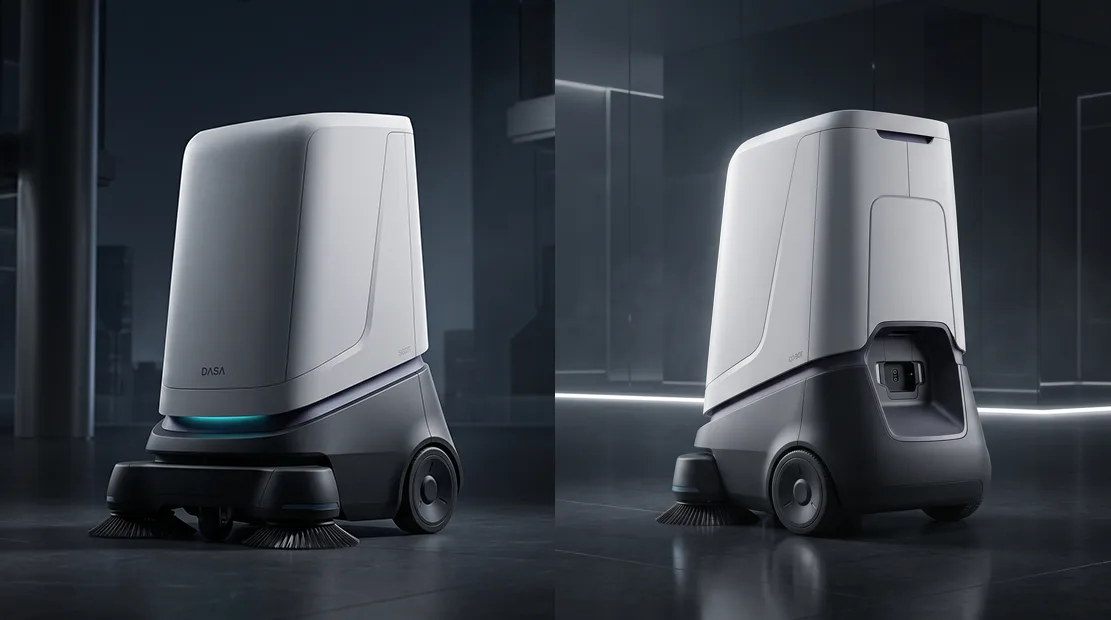
상부의 화이트 컬러와 하부의 다크 그레이 컬러의 대비 역시 본 제품 디자인의 중요한 특징 중 하나입니다. 청결함과 신뢰성을 상징하는 밝은 상부 컬러는 빌딩 내부 공간과 자연스럽게 조화를 이루며, 하부의 안정감 있는 다크 톤은 실제 구동 장비로서의 기능성과 견고함을 강조합니다. 또한 두 영역이 만나는 경계에는 부드러운 곡면 흐름과 포인트 컬러를 적용하여 기계적인 단절감을 줄이고, 제품 전체가 하나의 통합된 조형으로 인식될 수 있도록 디자인하였습니다. 이러한 컬러와 소재의 대비는 단순한 시각적 차별화가 아니라, 제품의 기능 영역을 자연스럽게 구분하면서도 세련된 이미지를 유지하기 위한 디자인 전략이었습니다.
하부 주행부는 실제 로봇 장비로서의 안정성과 신뢰성을 표현하기 위해 낮고 견고한 비례로 설계되었습니다. 이동을 위한 휠 구조와 청소 브러시 영역은 기능적으로 명확하게 드러나면서도, 외부로 과도하게 노출되지 않도록 조형적으로 정리하여 깔끔한 이미지를 유지하였습니다. 특히 사용자가 장비를 바라보았을 때 산업 장비 특유의 복잡함이나 위압감을 느끼지 않도록, 기능 요소들을 조형 안으로 자연스럽게 통합하는 방식으로 디자인이 진행되었습니다. 전면 하단에 배치된 브러시 영역은 실제 청소 장비로서의 기능을 직관적으로 전달하면서도 전체 디자인의 균형을 유지할 수 있도록 세심하게 조율되었습니다.
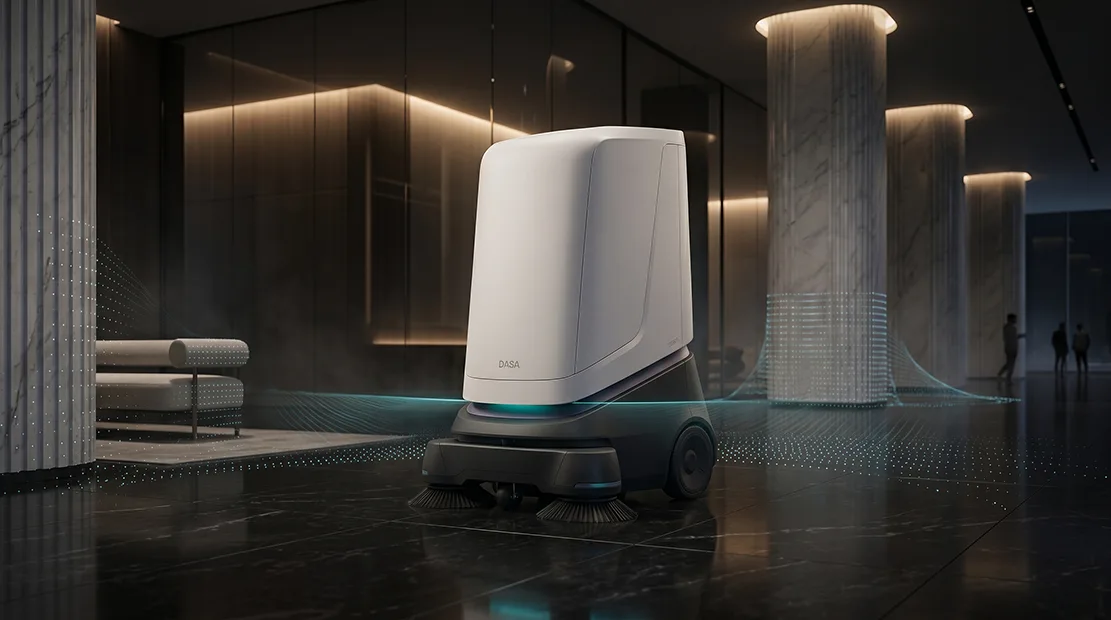
본 제품은 자율주행 기술이 적용된 빌딩 청소 로봇으로 개발되었기 때문에, 주변 환경과의 관계성 또한 디자인 과정에서 중요하게 고려되었습니다. 사람과 사물, 공간을 인식하는 센서 시스템이 적용된 장비였으며, 이러한 첨단 기술 요소들이 사용자에게 복잡하거나 낯설게 느껴지지 않도록 디자인적으로 정돈하는 과정이 필요했습니다. 센서 영역은 과도하게 강조하지 않고 전체 조형 안에 자연스럽게 통합함으로써, 기술 중심의 차가운 이미지보다 안정적이고 친근한 이미지를 전달할 수 있도록 하였습니다. 이는 단순히 기능을 숨기기 위한 접근이 아니라, 첨단 기술이 공간 속에서 자연스럽게 공존하도록 만들기 위한 디자인적 해석이었습니다.
후면부에는 도킹 방식의 자동 충전 시스템이 적용되었습니다. 작업이 완료되거나 배터리 충전이 필요한 경우, 제품은 스스로 보관 공간의 충전 장치로 이동하여 자동으로 도킹 및 충전을 수행할 수 있도록 설계되었습니다. 이러한 기능은 당시로서는 매우 진보적인 자동화 시스템 중 하나였으며, 디자인적으로도 후면부의 인상이 매우 중요하게 작용하였습니다. 후면 충전 영역은 단순한 기능 포트의 개념이 아니라, 로봇 장비의 핵심 인터페이스 중 하나로 인식하고 디자인되었습니다. 충전 커넥터가 적용되는 영역은 안정감 있는 입체 구조와 깊이감을 활용하여 자연스럽게 보호되는 형태로 구성되었으며, 전체 조형 흐름을 해치지 않으면서도 기술적인 완성도를 느낄 수 있도록 설계되었습니다.
특히 본 제품은 사람이 많은 공공 공간에서 반복적으로 운영되는 장비인 만큼, 지나치게 공격적이거나 위압적인 인상을 피하는 것이 중요했습니다. 이를 위해 전체적인 실루엣은 부드럽고 안정감 있는 비례를 기반으로 구성되었으며, 각 모서리와 면의 연결부 또한 최대한 자연스럽고 유기적으로 이어지도록 설계하였습니다. 이러한 접근은 사용자가 장비를 바라보았을 때 심리적인 거부감을 줄이고, 공간 속 하나의 정돈된 시스템처럼 인식될 수 있도록 하기 위한 디자인 전략이었습니다.
또한 제품의 디자인은 단순히 외형적인 아름다움만을 목표로 한 것이 아니라, 실제 운영 환경에서의 유지관리성과 생산성까지 함께 고려하여 개발되었습니다. 외부 패널 분할 구조와 조립 방식은 양산성과 정비 효율성을 고려하여 설계되었으며, 장기간 운영되는 장비 특성상 오염과 스크래치에 대한 관리가 용이하도록 소재와 표면 처리 방향도 함께 검토되었습니다. 특히 넓은 면적의 상부 패널은 단정하고 깨끗한 이미지를 유지할 수 있도록 최소한의 라인만을 적용하여 조형 완성도를 높였습니다.
본 프로젝트는 2008년 당시의 기술 환경 속에서 미래형 서비스 로봇이 가져야 할 디자인 방향성을 제안한 의미 있는 개발 사례였습니다. 단순한 산업 장비의 이미지를 넘어, 사람과 공간 속에서 자연스럽게 공존할 수 있는 로봇 디자인의 가능성을 탐구하였으며, 기능성과 조형성, 그리고 공간과의 조화를 동시에 고려한 프로젝트였습니다. 현재의 시점에서 보더라도 과도한 장식이나 일시적인 트렌드에 의존하지 않고, 절제된 조형과 안정적인 비례를 기반으로 완성된 디자인이라는 점에서 의미가 있는 프로젝트라 할 수 있습니다.
본 제품은 단순히 청소를 수행하는 자동화 장비가 아니라, 공간의 품격과 운영 시스템의 신뢰성을 함께 표현하는 지능형 서비스 로봇으로서 디자인되었습니다. 그리고 이러한 방향성은 당시 다사로봇사가 추구하고자 했던 미래형 빌딩 관리 시스템의 철학과도 맞닿아 있는 프로젝트였습니다.
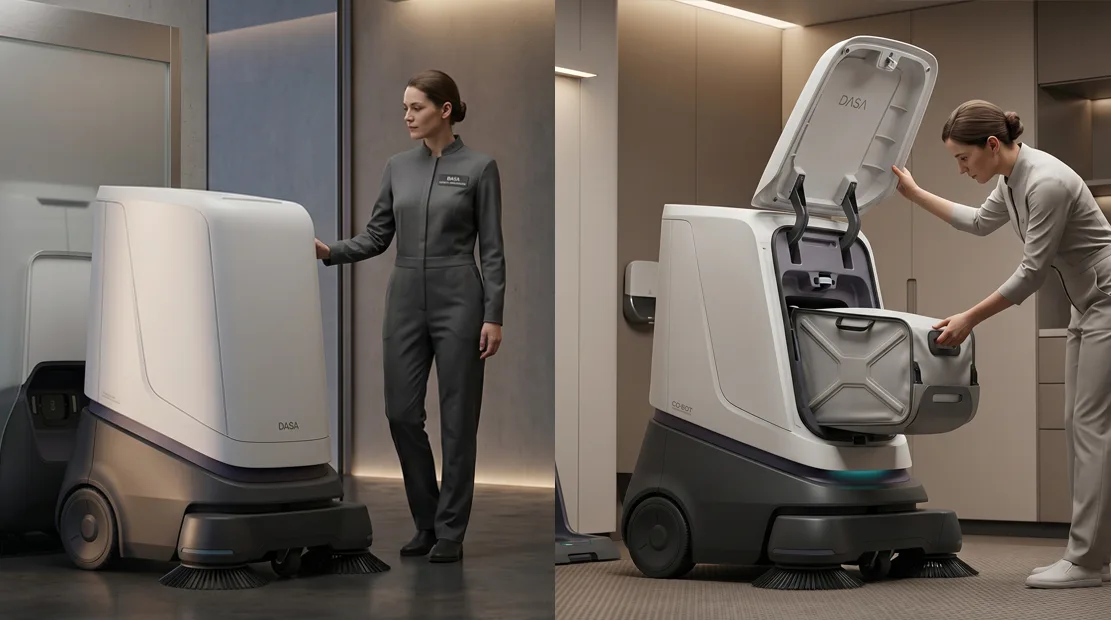
This project was developed in 2008 for DASA Robotics as a premium autonomous cleaning robot designed for large-scale building environments such as lobbies, exhibition halls, and public facilities. Rather than approaching the product as a conventional industrial cleaning machine, the design focused on creating a sophisticated robotic system that could naturally coexist within high-end architectural spaces while delivering a strong sense of reliability and advanced technology.
The overall design language emphasizes clean surfaces, refined proportions, and minimal yet confident character lines. The upper body was designed as a simple and elegant volume with uninterrupted flowing surfaces, allowing the product to appear calm, modern, and trustworthy within premium interior environments. Instead of exposing complex mechanical elements, the exterior form was intentionally simplified to create a seamless and integrated appearance, closer to a premium appliance or intelligent service robot than a traditional cleaning device.
One of the key design features is the dynamic diagonal character line flowing across the side profile. This subtle yet distinctive line adds a sense of motion and forward energy while visually reducing the heavy appearance typically associated with large cleaning equipment. The balanced combination of soft curvature and controlled geometric surfaces gives the robot a stable and sophisticated identity, reinforcing both technological precision and visual cleanliness.
The contrast between the clean white upper body and the darker lower driving platform was carefully considered to express both purity and stability. The white upper section communicates cleanliness and harmony with modern architectural spaces, while the darker lower body visually strengthens the product’s mechanical reliability and durability. A subtle accent line between the two volumes softens the transition and adds a refined futuristic detail without becoming visually excessive.
The lower platform was designed with a low center of gravity and stable proportions to visually communicate operational reliability. Functional components such as the wheel system and cleaning brushes are naturally integrated into the form while remaining visually organized and controlled. Rather than exposing industrial complexity, the design carefully conceals and simplifies functional details to maintain a clean overall appearance.
As an autonomous robotic cleaning system, the product was designed to detect surrounding people, objects, and environmental conditions through integrated sensor technologies. These advanced technical features were harmonized within the overall design language so that the robot would feel approachable and intelligent rather than mechanical or intimidating. The sensor areas were subtly integrated into the body, allowing the technology to become part of the product’s visual identity without disrupting its refined aesthetic.
The rear section of the product incorporates an automatic docking charging system. When cleaning operations are completed or battery charging becomes necessary, the robot autonomously returns to its designated docking station installed within the building maintenance area. The charging interface was designed not merely as a functional connector, but as an important part of the robot’s architectural form language. The recessed docking area provides both protection and visual depth while maintaining the clean and minimal rear appearance.
Another important aspect of the design was emotional accessibility. Since the robot operates continuously around people in public environments, the design intentionally avoids aggressive or overly technical expressions. Smooth transitions between surfaces, softened edges, and balanced proportions create a friendly yet professional appearance suitable for premium public spaces.
This project represented an early exploration of how autonomous service robots could be integrated into modern architecture through thoughtful industrial design. By combining functionality, spatial harmony, and a refined visual identity, the DASA Robotics cleaning robot proposed a future-oriented vision of intelligent building maintenance systems while maintaining a timeless and disciplined design language.